Looking towards the Stanley Cup Final, another season gone, I have to pause and take it in. I think if you don’t stop and actually sit with a season before it disappears into the record books, you lose it – not just the wins and losses, but the emotion of it, the weird moments, the things that made this year feel like 2025-26 and nothing else. Hockey seasons are long and brutal and they have a way of compressing time, of making October feel like a fever dream by the time June rolls around. You blink and it’s over. And then suddenly it’s the Stanley Cup Final, and it feels almost like it arrived suddenly, with finality, before we’ve fully processed how we got here. I find myself genuinely lucky to have experienced another year of, to misquote Archie Andrews from Riverdale, the epic highs and lows of professional hockey.
This was a season with a lot to hold. We got the Olympics back after twelve years (oof). Celebrini put up 100 points at nineteen years old, becoming just the sixth teenager in NHL history to do it. Schaefer looked like he’d been playing in this league for years. The kids, as they say, are alright. Crosby went back to the playoffs, the Leafs managed to somehow snag themselves the first overall pick, my Minnesota Wild finally broke their first round curse. And somewhere in there, Ovechkin kept playing hockey, even if it sort of reminds you of an old dog walking up the stairs.
But that’s enough reminiscing. Let’s get into the nitty gritty of this final.
Vegas versus Carolina. I want to acknowledge my bias first, not that I’ve ever pretended to be anything other than biased. I love this city. Desperately. There is something about Raleigh that gets into you, the humidity, the pine trees, the way summer here feels like it lasts forever and somehow you don’t mind. I grew up in Appalachia and spent my youth dreaming of the big cities. I dreamt of slipping away on the next coal train through the mountains and riding it all the way to the mystical lands of New York, or LA, or Chicago, or Seattle, or anywhere but the south.
And I did, eventually. I slipped away to a slightly less glamorous midwestern city, convinced that somewhere colder and grayer and farther from home was where I was supposed to become myself. It wasn’t. The winters were brutal in a way my southern blood never adapted to. The anonymity I thought I wanted turned out to just be loneliness with better branding. I had this idea that leaving the south meant leaving behind everything that made me feel small, and what I found instead was that some of that smallness had followed me, and some of what I’d left behind was actually holding me up. I missed the food and the slowness and the way people talk to you like they have nowhere to be. I missed being warm.
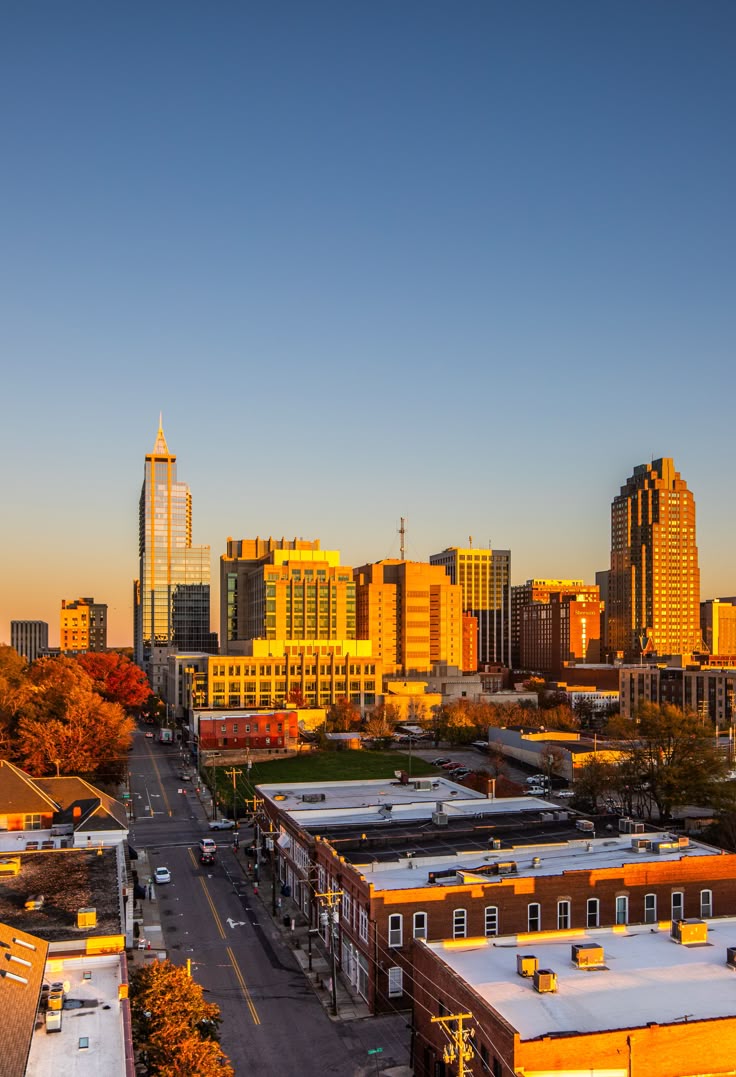
And when I came back south, when I landed in Raleigh specifically, something in me just…exhaled. This wasn’t the south I’d been running from. This was something else. A city that contains multitudes, that lets you be a lot of things at once, that has somehow managed to be both deeply itself and welcoming to people who show up here from somewhere else and need a place to land. I found my people here. I found a home.
The hockey helped. There is nothing quite like a southern hockey crowd, and I mean that in the best possible way, people who found this sport, who chose it. The Lenny on a playoff night feels like a secret the rest of the NHL hasn’t fully figured out yet. I belong here in a way that still surprises me sometimes. As I said recently on Twitter, I may not be a Canes fan, but if I die in Raleigh, I will in fact die free. This of course is a reference to Wagon Wheel by Old Crow Medicine Show (popularized by Darius Rucker).
While recognizing my own bias, I also want to recognize the thing that makes Vegas so fascinating and so complicated in equal measure. The Golden Knights filled their inaugural roster with players from all 30 existing teams, they didn’t build from the ground up so much as they assembled the pieces of other franchises and built something new from them. Which, credit where it’s due, they did. The pageantry, the mythology, the sense of occasion–it came together fast, and it works. Pre-game celebrations at T-Mobile Arena borrow heavily from Vegas show culture: elaborate light displays, costumed performers, production values that rival major concerts. They constructed an identity in real time, out of parts that belonged to other stories, and somehow made it feel like their own. What I find myself turning over is not whether it’s legitimate – it clearly is – but what it means for a sport that has always placed so much value on the slow build, on the suffering, on the decades it takes to make a fanbase feel like a community.
Vegas, in the roster construction sense at the very least, skipped that part.
Carolina, as an organization, has not suffered the curse of failure in the traditional sense. They’ve been rehearsing for this big dance so long that their dancing shoes must be worn down to nothing. They’ve set their sights on that silver shining sunrise of Lord Stanley, and they have watched the sun set on a sweep in the Eastern Conference Finals more times than any other team this decade.
The Canes do not suffer the curse of failure in the traditional sense. They suffer the curse of almost. Of not quite. Of never enough.
And maybe making it here, to the Final, should be a triumph. It should be an exhale. A dragon slayed. Perhaps it would be in an organization without Rod Brind’Amour at the reins. Perhaps it would be in an organization that doesn’t feel desperately hungry for this. For redemption, for a chance, for a goddamn win.
As Rod Brindamor said “I know everyone makes a lot about getting this far, but nobody’s going to remember who comes in second. You’ve got to win.”
My Prediction
I would like to sit here and predict a sweep in Carolina’s favor, just an absolute barn burner. Every line clicking, a deadly powerplay, a penalty kill that doesn’t let a single shot even get off.
I wish I believed that.
There’s a lot of reasons I am not huge on the idea of watching the Knights lift the Cup. There’s the obvious ones, and I don’t want to spend a lot of time going over the big one. What I will say is that I refuse to participate in the act of a redemption arc for a man who has not done an ounce of redeeming. I think it is a devastating stain on the National Hockey League’s legacy that we are going to watch Carter Hart compete for, and possibly win, a Stanley Cup. We are going to watch him be in the conversation for the Conn Smythe. It is a stain sitting upon so many stains that it’s a miracle the Cup is as shiny as it is.
And that’s kind of the thing, isn’t it. Hockey has always been pretty good at the shine. The sport is excellent at mythology, at insisting on its own nobility, at wrapping ugly things in toughness and tradition until they become culture instead of liability. The enforcer system got eulogized like it was something sacred. Hits that ended careers got replayed as highlight reel moments. Guys played through concussions and called it heart. The culture has spent decades confusing damage with devotion, and it has largely gotten away with it because the product is fast and beautiful and the people who love it love it so completely that they don’t always want to look at what’s underneath.
So when the league puts Carter Hart on a Stanley Cup Final roster and the broadcast machine starts doing what it does, starts finding the angle, and starts softening the edges, it’s not an aberration. It’s the system working exactly as designed. Hockey doesn’t reckon. It rebrands. And the Cup gets a little less shiny every time we all just kind of go along with it.
That’s all I’ll say on that matter. I feel like I cannot properly discuss the hockey of it all without acknowledging that, without at least planting a flag that says I see it and I am not going to pretend it isn’t there. But this is, ultimately, a hockey series. So let’s talk about the hockey.
I am not quite sure who is going to win this series. That is not a sentence I say often. Usually I go into a matchup, even the most evenly matched ones, and I have a pretty solid guess. A lean. A feeling in my gut. I don’t have that here. I hate to say it but I’m stumped. It’s going to take game one for me to feel like I have a grasp on this series.
If you examine this season alone in a vacuum, it’s almost a David and Goliath story. The dominant Hurricanes against the winners of what was a pillow fight of a division. The one underdog story that nobody seems to be particularly charmed by. And I get that. Vegas doesn’t read as an underdog. But on paper, this season, Carolina was the better team. It’s right there in the numbers, in black and white.
But I think when you step backwards and look at the full picture, the roles start to reverse a bit. Carolina has plenty of playoff experience but Vegas has finals experience. They have winning experience. They’ve been here before, more than once, and they know what this pressure feels like in their bodies. Jack Eichel is a different animal in the playoffs than he was three years ago. He has figured something out, and a confident Eichel with Mark Stone healthy enough to play meaningful minutes and Mitch Marner still doing whatever dark magic Mitch Marner does is a genuinely terrifying top end.
Carolina’s case is built differently. It’s built on systems so suffocating that good teams start making mistakes they don’t usually make. It’s built on Seth Jarvis having a coming out party that I don’t think the national audience has fully clocked yet. It’s built on Sebastian Aho being exactly as good as he has always been but doesn’t always show up when it matters. It’s built on Frederik Andersen, who has looked like a different goalie than he has ever looked like before, playing with something to prove. And it is built, foundationally, on the fact that Rod Brind’Amour will have this team prepared in a way that few coaches in the league are capable of.
The special teams battle is going to matter enormously. Vegas has the firepower to make you pay if you take bad penalties. The Hurricanes need to stay disciplined in a way that has not always been their strong suit in high pressure moments.
So I make this prediction with the full acknowledgment that my heart isn’t quite in it. I want to believe more than I do. I want to be the person banging the table, telling you Carolina in five, telling you this is the year the rehearsal finally becomes the performance. I’m not quite there. What I am is cautiously, nervously, stubbornly hopeful. The Hurricanes are the better team on paper this season. The systems are suffocating in a way that even playoff-tested teams struggle to adjust to mid-series. Andersen is hot. So many Hurricanes have been waiting for a stage like this their entire career.
But Vegas is Vegas. They know how to win when it costs something. They have done it before and they are constructed specifically to do it again. This is not a team that beats itself. This is not a series Carolina can sleepwalk through a single period of.
So. Canes in six. Because I think the better team can find a way, and I think Carolina is the better team. Because I think Rod Brind’Amour has been waiting for this moment for a very long twenty years and I would not want to be the team standing across from him when he finally gets it. And because, honestly, I need this. The hockey community I have built my life around in Raleigh needs this. And sometimes that has to count for something too.
TL;DR Canes in 6
Leave a Reply